People
The Multi-Scale Ecology Team
Marco D. Visser (PI)
 Ecological processes are inherently multi-scale and this makes the study across scales not only but a natural approach to ecology but also essential understanding the complex web of life. Cross-scale integration serves as a bridge to merge diverse datasets and reveal significant value beyond the confines of scale-specific studies. In my role as a theoretical macroecologist at the Institute of Environmental Sciences, Leiden University, I am engaged in scaling ecological processes from the microscopic to the ecosystem level. I explore how diversity in individual traits at microscopic scales influence biodiversity and, subsequently, how these interactions shape ecosystem dynamics and their impact on climate feedbacks. With a commitment to merging "big data with big theory", I apply physics-aware machine learning to investigate the health and future of tropical forests. My dedication to open and reproducible science drives me to publish most of my code and develop open-source R-packages for high-performance computing, automated tracking, computer vision, and radiative transfer modeling. Through this work, I strive to foster a deeper understanding and appreciation of our natural world, aiming to contribute meaningful solutions to some of the most pressing environmental challenges we face today.
PhD students
Peng Sun
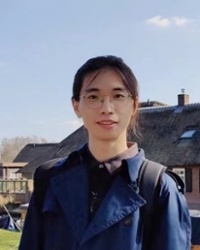 Peng, earned his MSC degree in 2021 from the South China Botanical Garden at the Chinese Academy of Sciences, focuses on robust remote observation of vegetation dynamics. A key aspect of Peng's work involves merging machine learning with biophysical models, a strategy aimed at addressing environmental problems in regions where data is scarce. Peng'sapproach not only enhances the accuracy of predictions about the terrestrial carbon sink but also illustrates the potential of combining advanced technologies with ecological research to confront environmental challenges where data is lacking.
Manuela Rueda Trujillo
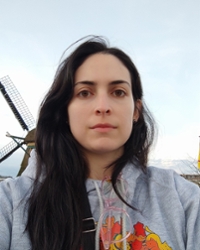 Manuela's academic journey began with her M.Sc. thesis, where she explored the impact of past climate changes during the Lateglacial period on the distribution of altitudinal vegetation belts in the Paramo de Berlín, located in the Colombian Eastern Cordillera. Her research utilized a multidisciplinary approach, analyzing pollen grains, stratigraphy, titanium and iron contents, loss-on-ignition, and radiocarbon dating of a sedimentary core. Following her master’s degree, Manuela embarked on independent research examining how precipitation, vapor pressure deficit, and deforestation affect photosynthesis in Amazonian forests, as indicated by changes in the annual cycle of Sun Induced Fluorescence (SIF).
Before joining the CML, Manuela contributed her expertise to the Laboratory of Geomatics at Universidad Nacional de Colombia. There, she engaged in various extension projects that focused on urban green zones, ecological connectivity, landscape analyses, water irrigation districts for agricultural development in rural areas, and deforestation monitoring in regions allocated for hydropower production.
Armed with the knowledge gained from these experiences, Manuela is now eager to advance her understanding of vegetation-climate feedbacks and their effects on the distribution of terrestrial tropical ecosystems through her PhD studies. Her primary motivation for pursuing a research-oriented career is the continuous opportunity it presents to discover and learn something new every day.
Manuela's academic journey began with her M.Sc. thesis, where she explored the impact of past climate changes during the Lateglacial period on the distribution of altitudinal vegetation belts in the Paramo de Berlín, located in the Colombian Eastern Cordillera. Her research utilized a multidisciplinary approach, analyzing pollen grains, stratigraphy, titanium and iron contents, loss-on-ignition, and radiocarbon dating of a sedimentary core. Following her master’s degree, Manuela embarked on independent research examining how precipitation, vapor pressure deficit, and deforestation affect photosynthesis in Amazonian forests, as indicated by changes in the annual cycle of Sun Induced Fluorescence (SIF).
Before joining the CML, Manuela contributed her expertise to the Laboratory of Geomatics at Universidad Nacional de Colombia. There, she engaged in various extension projects that focused on urban green zones, ecological connectivity, landscape analyses, water irrigation districts for agricultural development in rural areas, and deforestation monitoring in regions allocated for hydropower production.
Armed with the knowledge gained from these experiences, Manuela is now eager to advance her understanding of vegetation-climate feedbacks and their effects on the distribution of terrestrial tropical ecosystems through her PhD studies. Her primary motivation for pursuing a research-oriented career is the continuous opportunity it presents to discover and learn something new every day.
Mirko Forastiere
 Mirko completed his BSc in Chemistry in 2020 at the University of Padua, Italy, where his thesis work concentrated on the effects and disposal methods of a widely used organophosphate pesticide. He furthered his education at the same institution, earning an MSc in Evolutionary Biology in 2022. His master's thesis investigated the role of Chondrichthyes within the Mediterranean Sea's trophic network, highlighting his growing interest in ecological interactions.
Mirko is currently engaged in a research project investigating the ecological impacts of pesticide exposure on aquatic macroinvertebrate and insect communities. The primary objective is to understand how such exposure disrupts ecological networks, with particular emphasis on cascading effects across trophic levels. To support this, Mirko will construct comprehensive Species Sensitivity Distributions (SSDs) by employing predictive models to estimate toxic effects across a broad range of species, including those typically excluded from standard toxicological assessments. This integrative approach aims to elucidate the complex pathways through which chemical stressors affect biodiversity, ecosystem functioning, and the wider socio-ecological consequences of anthropogenic pollution.
Mirko completed his BSc in Chemistry in 2020 at the University of Padua, Italy, where his thesis work concentrated on the effects and disposal methods of a widely used organophosphate pesticide. He furthered his education at the same institution, earning an MSc in Evolutionary Biology in 2022. His master's thesis investigated the role of Chondrichthyes within the Mediterranean Sea's trophic network, highlighting his growing interest in ecological interactions.
Mirko is currently engaged in a research project investigating the ecological impacts of pesticide exposure on aquatic macroinvertebrate and insect communities. The primary objective is to understand how such exposure disrupts ecological networks, with particular emphasis on cascading effects across trophic levels. To support this, Mirko will construct comprehensive Species Sensitivity Distributions (SSDs) by employing predictive models to estimate toxic effects across a broad range of species, including those typically excluded from standard toxicological assessments. This integrative approach aims to elucidate the complex pathways through which chemical stressors affect biodiversity, ecosystem functioning, and the wider socio-ecological consequences of anthropogenic pollution.